

Ayushman Bharat: To ensure success, the govt can take a leaf out of these public health programmes
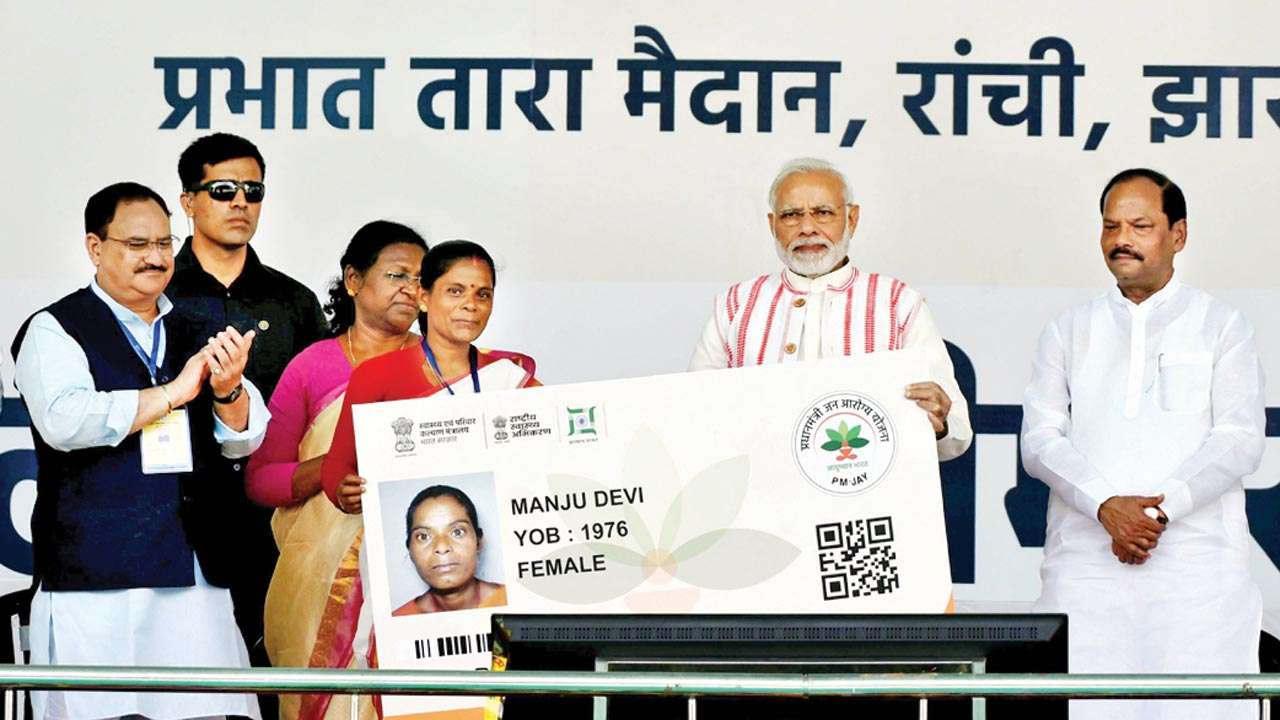
Hearty congratulations to Prime Minister Narendra Modi and his team for the launch of the Ayushman Bharat Yojana as part of the PM-JAY that aims to create a healthier India. With an impact plan of over 10 crore families and 50 crore beneficiaries, the magnitude of this initiative leaves me spellbound. It is probably the largest public endeavour towards financial protection and health coverage for all Indians.
The recent launch has been met with a flurry of accolades and criticism. One gap area that has been highlighted is adverse doctor-patient ratio in the public health system, where there are too few doctors to serve the high population under this scheme. There are many who believe that this will deal a huge blow to the efficacy of the new programme. While it is true that the lack of sufficient doctors is a significant obstacle, some best practices from the sector that pan across NGOs, social enterprises and the government public health system can have a catalytic effect and help Ayushman Bharat shine at its brightest.
These best practices showcase how one can make the most of scarce resources while delivering value to high numbers of people and cover the talent & skill deficit in the medical space.
The potential of the concept of medical volunteerism will lie at the centre of this article. Public Health Programmes that are wholly or partly enabled by a voluntary task-force of medical professionals have seen incremental success over the past few decades. Within the public sector, an excellent example is the Mumbai Mission for TB Control, which has co-opted public sector medicos to volunteer their time at government hospitals. There are specific OPD / Operative days when private specialists attend to patients in the government health system. A similar model will need to be expedited and managed at a massive scale to do justice to the power of the scheme.
Reaching the unreached, the Impact India Foundation’s Lifeline Express, a train that travels to the remotest of locations with a crew consisting of paid doctors as well as medical volunteers, including specialists and super-specialists. This train has in-built facilities for performing operations as well. With unprecedented success, the model encourages medical volunteerism serving the most underserved segments of our population. The IIF invites volunteers, some of them from overseas, to spend a specific amount of time on the Lifeline Express.
There are several NGOs that are delivering thought and practice leadership in this sector, such as the Family Planning Association of India (FPAI). Renowned medical professionals from the private health sector are a part of FPAI’s national and local volunteer boards. The organisation enables their services to reach over three crore people a year, with over 30 lac people receiving clinical services.
Another instance is the award-winning model developed by a social enterprise - the Aravind Eyecare Hospital. This organisation has been instrumental in delivering the maximum possible eye surgeries per hour using an almost ‘assembly-line’ like system. This enables a single doctor to impact a much higher number of patients, thus addressing the adverse doctor-patient ratio. Since this model enables a high turnover of patients, it can accommodate a good number of poorer, non-paying patients who are given the same standard of care as paying patients.
An important resource bank that could be tapped for the new programme is the large number of NRI medical professionals who are looking to give back to their motherland. A fantastic example of leveraging this sentiment for greater public good is USAID’s initiative of associating with the American Association of Physicians of Indian origin (AAPI) to volunteer their expertise in India. Partnerships like these will not just plug gaps, but enhance the quality of implementation of the Ayushman Bharat programme with world class medical skills being made available to the population at large.
These and other strategies that have proven effective in the development eco-system can be adopted, adapted and scaled to serve the millions who are now underserved by the public health system. While there is no debate about the need to address the doctor-patient ratio in the public health system, creative solutions can go a long way towards bridging the gap and bringing healthcare to millions of Indians who deserve to live healthy and productive lives.
As public health professionals, I urge people to see Ayushman Bharat as a ‘channel’ - we just need to be relentless in finding answers to three questions:
- How do we serve the most needy with these pathbreaking innovations and models for adoption?
- How do we build new models of success so that the largest democracy in the world can be the biggest example of successful health service delivery?
- How do we find solutions to a problem instead of problems in a solution?
The author is the Co-Founder of VIVA Development Strategies, a consulting practice in the development sector that provides turnkey solutions in the area of social responsibility and development for various stakeholders in the development eco-system. She is a recipient of the CSR Professional of the Year Award (2016) awarded by Dr. Bhaskar Chatterjee and IndiaCSR. Views are personal
from Daily News & Analysis https://ift.tt/2zCcreC


No comments: